You’ve asked the question, “Do autistic kids talk?” and you’re not alone. Many parents of neurodivergent kids wonder about their child’s communication abilities. In this blog post, we’ll explore the different ways autistic kids communicate, how their language development may differ from neurotypical children, and what you can do to support your child’s communication journey. We’ll also discuss the importance of understanding your child’s unique communication style and share some practical tips for fostering a positive communication environment, all while keeping in mind the benefits of tools like Goally.
Table of Contents
Understanding Autism and Communication
Firstly, it’s essential to recognize that autism is a spectrum disorder, meaning that each child’s experience and abilities can vary significantly. Some autistic kids may develop verbal communication skills similar to their neurotypical peers, while others may experience delays or rely on alternative communication methods. However, one thing is certain: all autistic kids have the potential to communicate in their own unique way.

Read More: How to Use Autism Communication Strategies
To better understand the communication abilities of autistic kids, let’s take a closer look at how their language development may differ from neurotypical children.
Language Development in Autistic Kids
Autistic kids’ language development can follow a different trajectory compared to neurotypical children. For instance, some autistic kids may:
- Develop language skills later than their peers
- Experience difficulty with understanding or using nonverbal cues
- Struggle with understanding or using figurative language
- Have a limited or repetitive vocabulary
- Use echolalia, which is the repetition of words or phrases

Despite these differences, many autistic kids can and do develop verbal communication skills. It’s crucial to remember that each child’s journey is unique, and progress may not always follow a linear path. That is to say, patience and understanding are key when supporting your child’s language development.
Alternative Communication Methods
For autistic kids who experience difficulty with verbal communication, alternative methods can be incredibly valuable. Some examples include:
- Visual supports: Using pictures, symbols, or written words to help convey meaning
- Sign language: Teaching your child to use hand gestures to communicate
- Augmentative and alternative communication (AAC) devices: Tools like speech-generating devices or communication apps that can help your child express themselves
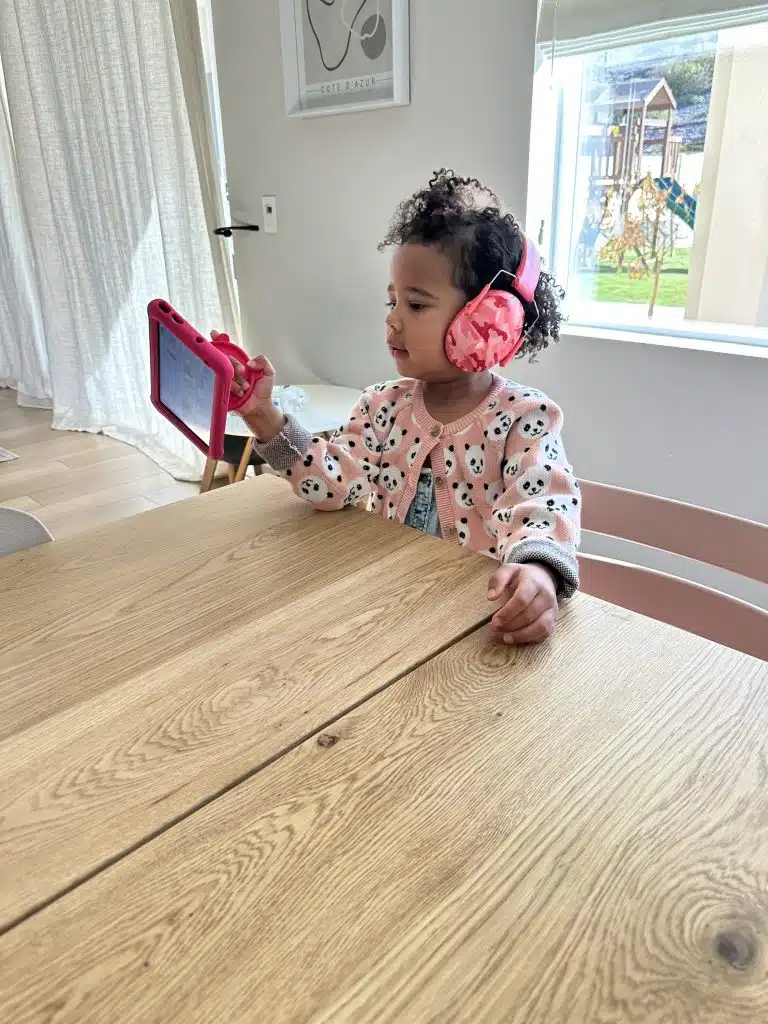
“I found Goally on Instagram a few months ago and I thought, this sounds like a perfect aid for Ivy. Ivy had just started speaking, but her communication was still very minimal. Goally’s visual schedule and AAC-inspired Talker had me really interested. While we want and believe Ivy will find her voice and spoken language, we also believe that communication comes in many forms. Goally has helped us offer our daughter a voice while she learns to find her own. The key is to support communication in whatever form that takes.” – Cassidy I.
Exploring these options can empower your child to communicate more effectively and boost their confidence. Goally, for example, offers a learning tablet for kids that can be an excellent tool for supporting alternative communication methods.
Creating a Supportive Communication Environment
Above all, fostering a positive communication environment is essential for helping your child develop their language skills. Here are some tips to consider:
- Be patient: Give your child ample time to process information and respond.
- Use clear, concise language: Keep your sentences short and straightforward.
- Encourage nonverbal communication: Recognize and validate your child’s use of gestures, facial expressions, or body language.
- Model appropriate language: Demonstrate the language you’d like your child to use by speaking clearly and using a variety of words and phrases.
- Celebrate progress: Acknowledge and praise your child’s communication efforts, no matter how small.
Check out 6 more autism language development activities. In addition to these tips, consider incorporating tools like Goally into your daily routine to help your child stay organized and focused, which can further support their communication development.
Seeking Professional Support
In addition to your efforts at home, seeking professional support can be beneficial for your child’s communication development. Speech and language therapists, occupational therapists, and special education teachers can provide valuable guidance and tailored strategies to help your kid reach their full communication potential.
| Professional | Role in Supporting Communication |
|---|---|
| Speech and Language Therapist | Assess and develop individualized treatment plans to improve communication skills |
| Occupational Therapist | Address sensory and motor challenges that may impact communication |
| Special Education Teacher | Implement strategies and accommodations to support communication in the classroom |
Goally | Apps that Teach Kids AAC & Core Words
Is your child facing challenges in expressing themselves or communicating effectively? Goally has one of the best language language learning apps for kids to support their journey in building essential communication skills!
The Word Lab and AAC Talker apps provide a simple, engaging platform for your child to learn core words and become a functional communicator right from the start. Customize the experience with a voice that suits them, and watch as their confidence grows in expressing their thoughts and needs!
To sum up, while the answer to “Do autistic kids talk?” may vary from child to child, it’s essential to recognize that all autistic kids have the potential to communicate in their own unique way. By understanding your child’s communication style, exploring alternative methods, and creating a supportive environment, you can help your kid develop the skills they need to express themselves and connect with others. With the right support, including tools like Goally, your child can thrive in their communication journey.
FAQs About Do Autistic Kids Talk?
Do all autistic children have difficulty with speech and communication?
Not all autistic children have difficulty with speech and communication. Some may have challenges in these areas, while others may develop language skills on a typical timeline.
What are some common communication challenges faced by children with autism?
Children with autism may struggle with verbal and non-verbal communication, including difficulty understanding social cues, maintaining eye contact, and expressing emotions or thoughts through speech.
How can parents support the communication skills of their autistic children?
Parents can support communication by using visual aids, practicing consistent routines, engaging in interactive play, and working closely with a speech-language pathologist.
Can speech therapy help autistic children develop better communication skills?
Yes, speech therapy can be highly effective for many autistic children, helping them develop speech, language, and social communication skills tailored to their individual needs.
Are there any specialized tools or apps that can assist autistic children in learning to talk?
Yes, there are various tools and apps designed specifically for autistic children, focusing on visual schedules, emotional regulation, and rewards to enhance learning and communication skills.
This post was originally published on 06/08/2023. It was updated on 08/06/2023.

Goally
We help parents teach their kids life skills, like doing bedtime and morning independently. Backed by science, we incorporate evidence-based practices and expert-informed designs in all of our apps and content.