Have you ever noticed subtle differences in your child’s facial expressions or autistic eyes compared to their peers? These variations, often referred to as autistic facial features, can provide valuable insights into your child’s unique way of experiencing the world. In this post, we’ll explore the key characteristics of autistic facial features, discuss the importance of understanding these differences, and offer practical tips for supporting your neurodivergent child. So, let’s get started with the most common autistic facial features and how they manifest in kids.
Table of Contents
Goally | Visual Scheduler for Autism
Does your child struggle with getting ready in the morning independently? Goally’s routine app on the best tablet for kids breaks down large tasks into small, achievable steps for autistic kids. Create custom routines with your own videos & pictures for every step.
Autistic Facial Features: Common Characteristics
Kids with autism may exhibit certain facial features that set them apart from their neurotypical peers. These characteristics can include atypical eye contact, facial expressions, and slight asymmetry. Understanding these features can help you better support your child’s social and emotional development.
| Characteristic | Description |
|---|---|
| Eye Contact | Often described as “autistic eyes,” kids with autism may avoid eye contact, glance briefly, or stare intensely. This is not a sign of disinterest or rudeness; it’s simply a different way of processing social cues. |
| Facial Expressions | Neurodivergent kids may display fewer or more subtle facial expressions. They might not smile as often or as broadly, or their expressions may not match the emotions they’re feeling. |
| Asymmetry | Some research suggests that autistic facial features may include slight asymmetry, such as one eye being slightly larger or higher than the other. However, this is not a definitive characteristic and varies from child to child. |
Read More: Autism Diagnosis Checklist
Why Understanding Autistic Facial Features Matters
Recognizing autistic facial features is essential for several reasons. By understanding your child’s unique way of expressing emotions, you can better interpret their needs and feelings, leading to more effective Communication. Acknowledging and embracing these differences fosters a supportive environment for your child, promoting self-esteem and a sense of belonging. Furthermore, identifying autistic facial features early on can help you seek appropriate support and resources for your child, maximizing their potential for growth and development.
- Improved Communication: Better understanding of your child’s facial expressions and eye contact can enhance Communication.
- Empathy and Acceptance: Embracing these differences creates a supportive environment for your child.
- Early Intervention: Identifying autistic facial features early on can help you seek appropriate support and resources.
Supporting Your Child with Autistic Facial Features
Here are some practical tips for helping your child navigate the world with their unique facial expressions and eye contact. These strategies can make a significant difference in your child’s social and emotional development, and tools like Goally can provide additional support for your neurodivergent child.

- Encourage Social Skills: Provide opportunities for your child to practice social skills in a safe and supportive environment. Role-playing, social stories, and group activities can help them develop their abilities at their own pace.
- Be Patient: Give your child time to process and respond to social cues. Avoid rushing them or expecting immediate reactions.
- Use Visual Aids: Visual supports, such as emotion cards or social scripts, can help your child better understand and express their feelings. Goally offers a range of visual aids designed specifically for neurodivergent kids.
- Seek Professional Help: If you’re concerned about your child’s social development, consult with a professional who specializes in autism, such as a pediatrician, psychologist, or occupational therapist.
Goally | Apps To Support Child Development
Looking for fun ways to help your child learn life skills? Try Goally! The Goally tablet comes with award-winning learning apps and video classes to help kids develop the skills they need to become independent with FUN & evidence-based practices.
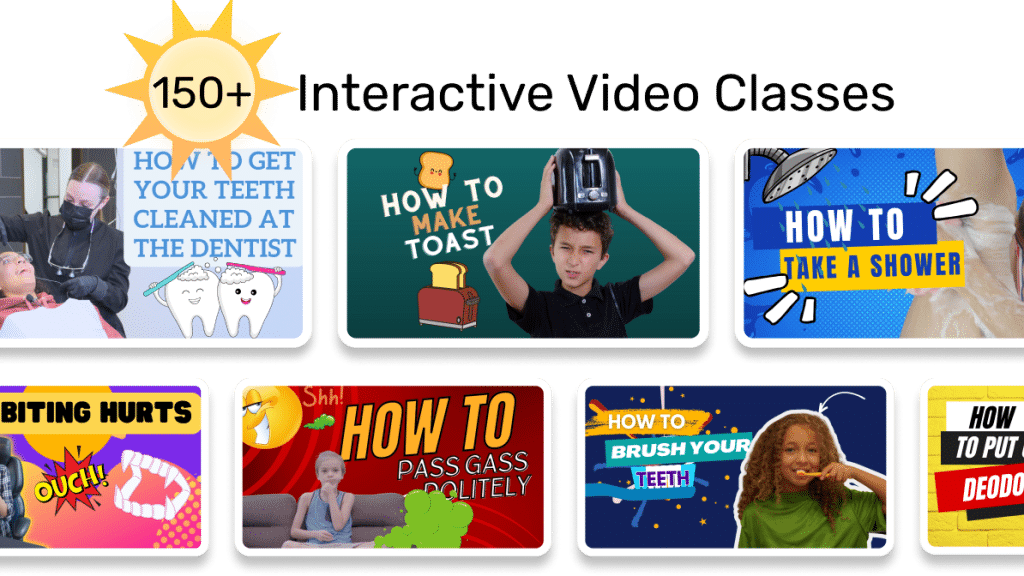
Our apps teach executive function, language, emotional regulation, finger dexterity skills, and more.
As your child develops new skills, you can increase the difficulty level of the tasks in the app to challenge and motivate them even further. This helps your child grow and progress at their own pace, while also keeping them engaged and excited about their development.
Final Thoughts on Autistic Facial Features in Kids
In short, understanding autistic facial features is crucial for supporting your child’s social and emotional development. By recognizing these differences and providing appropriate resources, you can help your neurodivergent child thrive in their unique way. Remember, every child is different, and autistic facial features/autistic eyes are just one aspect of their individuality. Embrace your child’s uniqueness and celebrate their strengths as you navigate this journey together. With the right support, including tools like Goally, your child can reach their full potential.
FAQ’s About Autistic Facial Features
Are there any identifiable autistic facial features?
No, autism is a neurological disorder and doesn't cause specific physical characteristics, including facial features.

How can autism be diagnosed?
Autism diagnosis is based on behavioral patterns such as social interaction, communication, and repetitive behaviors, rather than physical traits.

Does facial expression recognition improve with interventions for children with autism?
Yes, interventions like social skills training can improve facial expression recognition in children with autism.

What tools can help autistic children understand facial expressions?
Emotional regulation apps, social stories, and visual aids can help autistic children understand and interpret facial expressions.

Why is it difficult for some autistic individuals to interpret facial expressions?
Autism can affect social and emotional understanding, which may make interpreting facial expressions challenging.
This post was originally published on 06/06/2023. It was updated on 07/12/2023.

Goally
We help parents teach their kids life skills, like doing bedtime and morning independently. Backed by science, we incorporate evidence-based practices and expert-informed designs in all of our apps and content.