Working with kids every day, I often see how positive affirmations can make a big difference in their lives. It’s exciting to watch their confidence grow and their faces light up when they feel encouraged and supported. Today, I’ll be sharing with you the importance of using positive affirmations for kids and how it can impact their growth and development. We’ll explore practical tips, examples, and the science behind why affirmations work. This blog post will guide you on how to effectively use positive affirmations to help your kids thrive.
Table of Contents
What Are Positive Affirmations?
Positive affirmations are encouraging statements that help reinforce good thoughts and behaviors. For kids, these affirmations can help develop a strong sense of self-worth and confidence. According to research, using affirmations regularly can reshape a child’s thinking patterns, leading to a more positive outlook on life.
Why Are Positive Affirmations Important for Kids?
Positive affirmations are crucial because they help children develop a healthy self-image. Here are a few reasons why they are so important:
- Boosting Self-Esteem: Positive affirmations can help kids feel more confident and capable. When children hear positive messages about themselves, they start to believe them.
- Reducing Anxiety: Affirmations can be calming and reassuring, helping kids manage their worries and fears.
- Encouraging Positive Behavior: When kids repeat positive affirmations, they are more likely to exhibit the behaviors they are affirming.
- Promoting Resilience: Affirmations can help children bounce back from setbacks by fostering a positive and growth-oriented mindset.
How to Use Positive Affirmations with Kids
Using positive affirmations effectively involves consistency and creativity. Here’s how you can incorporate them into your daily routine:
1. Make It a Routine
Integrate affirmations into daily activities. For example, you can start the day with affirmations during breakfast or end the day with them before bedtime. Consistency is key to making affirmations a natural part of your child’s life.
2. Keep It Simple
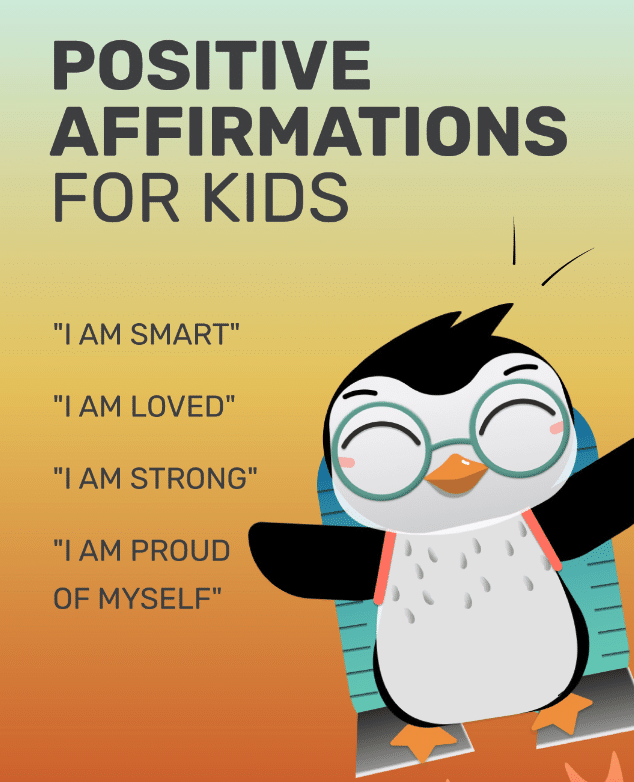
Use simple and clear statements that are easy for your child to understand and repeat. Short phrases like “I am strong” or “I am loved” are impactful and easy for kids to remember.
3. Be Specific
Tailor the affirmations to address specific areas where your child needs encouragement. For instance, if your child is struggling with schoolwork, use affirmations like “I am capable of learning new things” or “I am smart and hardworking.”
4. Use Visuals
Visual aids can enhance the effectiveness of affirmations. Create colorful posters with positive messages and place them around the house. Visual reminders help reinforce the affirmations throughout the day.
5. Involve Your Child
Let your child participate in creating their own affirmations. This involvement can make the process more meaningful and empowering. Ask your child to come up with positive statements that resonate with them.

Read more: Teaching Kids How to Keep Calm
Examples of Positive Affirmations for Kids
Here are some examples of positive affirmations you can use with your kids:
- I am loved and valued.
- I am strong and capable.
- I can achieve anything I set my mind to.
- I am kind and compassionate.
- I am a good friend.
- I am creative and imaginative.
- I am proud of who I am.
- I am brave and can face my fears.
- I am grateful for all that I have.
- I am unique and special.
Positive Affirmations for Neurodivergent Kids
For kids with thinking and learning differences, positive affirmations can be particularly beneficial. Here are some tailored examples:
- I am capable of overcoming challenges.
- I learn in my own unique way.
- I am proud of my progress.
- I am deserving of love and respect.
- I am brave and face my challenges head-on.
The Science Behind Positive Affirmations
Studies have shown that positive affirmations can help rewire the brain, promoting positive thinking and behavior. According to a study published in the journal Psychological Science, self-affirmation can boost problem-solving abilities under stress. This is particularly relevant for kids as they navigate their daily challenges.
See on Instagram
Tips for Creating Your Own Affirmations
Creating personalized affirmations for your child can make them more effective. Here are some tips to help you get started:
1. Focus on Strengths
Identify your child’s strengths and create affirmations that highlight these qualities. This helps reinforce their positive traits and boosts their confidence.
2. Use Positive Language
Avoid negative words. Instead of saying, “I am not afraid,” use, “I am brave.” Positive language is more powerful and uplifting.
3. Keep It Present Tense
Frame affirmations in the present tense to instill a sense of immediate belief and action. For example, “I am learning and growing every day.”
Overcoming Common Challenges
While using positive affirmations can be highly effective, you might face some challenges along the way. Here are some common issues and how to address them:
1. Consistency
It can be challenging to remember to use affirmations daily. To overcome this, set reminders or incorporate affirmations into established routines.
2. Believability
Sometimes, kids may find it hard to believe the affirmations. Start with affirmations that are easily believable and gradually introduce more ambitious ones as their confidence grows.
3. Variety
Using the same affirmations repeatedly can become monotonous. Introduce new affirmations regularly to keep things fresh and engaging.
Tired of Emotional Meltdowns?
Goally’s Mood Tuner app has activities for kids with BIG emotions. Teach kids how to tune their mood with Goally. See fewer meltdowns.
The Mood Tuner app encourages kids to look inwards and identify their feelings, helping them understand what’s going on inside. Once they’ve recognized their emotions, they can choose from a 20+ activities designed to help them self-regulate and find their balance.

Using positive affirmations for kids is a simple yet powerful way to support their emotional and mental well-being. By integrating affirmations into your daily routine, you can help your child develop a positive self-image and the confidence to face life’s challenges. Remember, the key is consistency and creativity. Start with the examples provided, and feel free to tailor them to suit your child’s unique needs and personality. Your encouragement and belief in your child’s potential can make all the difference.
Resources:
- American Psychological Association
- National Center for Biotechnology Information
- Edutopia
FAQs about Using Positive Affirmations for Kids
What are positive affirmations for kids?
Positive affirmations for kids are uplifting statements that promote self-belief, confidence, and positivity. They are designed to encourage a positive attitude and self-image in children.</p>

How can I introduce positive affirmations to my child?
You can introduce positive affirmations to your child by incorporating them into daily routines such as during bedtime or while driving to school. Make it a fun and engaging activity by saying them together.

Can positive affirmations help my neurodivergent child?
Absolutely, positive affirmations can be particularly empowering for neurodivergent kids, helping them build confidence, embrace their uniqueness, and foster a positive self-image.

How often should my child repeat these affirmations?
Consistency is key with affirmations. Encourage your child to repeat their chosen affirmations daily for the best results.

Can I create my own affirmations for my child?
Yes, you can certainly create your own affirmations. The most effective affirmations are those that resonate with your child and their unique experiences and needs.
This post was originally published on 01/12/2023. It was updated on 06/15/2024.

Goally
We help parents teach their kids life skills, like doing bedtime and morning independently. Backed by science, we incorporate evidence-based practices and expert-informed designs in all of our apps and content.