If you have a child with autism, you’re likely more familiar with doctors and therapists than many other families. There’s the initial search for a diagnosis, followed by various treatments, and managing other conditions like ADHD or gastrointestinal issues that often accompany ASD.
Table of Contents
Understanding the ICD Code for Autism
All of these interactions mean you’ve likely encountered the ICD-10-CM. But what exactly does this string of letters and numbers mean, and how does it relate to autism? This article aims to explain the ICD and its role in diagnosing autism.
What is the ICD-10?
The ICD-10 is a version of the International Classification of Diseases developed by the World Health Organization. It categorizes and labels diseases, disorders, and other health conditions with specific codes.
The ICD originated as the International Statistical Institute’s International List of Causes of Death in 1893. The World Health Organization later took over its maintenance. It expanded it to include all health conditions, not just fatal ones. Member countries use the ICD to compile national death and disease statistics.
The tenth edition, ICD-10, is currently in use globally. The ICD-10-CM is the version adapted for use in the United States, where it is used to diagnose conditions and record patient information. In contrast, the standard ICD-10 classifies data from death certificates.
ICD-10 was implemented globally in 1990. However, the United States adopted it for mortality data in 1999 and fully transitioned to the ICD-10-CM in 2015. This transition added about 55,000 new codes, making it a comprehensive tool for the medical field. These codes are essential for hospital billing, insurance claims, public health research, and tracking trends.

How is Autism Classified in the ICD-10?
ASD is identified with the code F84.0. This billable code is detailed enough to constitute a medical diagnosis. It falls under the category of mental and behavioral disorders (codes F00 through F99), specifically within pervasive and specific developmental disorders (F80 through F89), and more narrowly under pervasive developmental disorders (F84).
The ICD defines a pervasive developmental disorder as “severe distortions in the development of many basic psychological functions that are not normal for any stage in development.” While F84 is a non-billable code, the specific codes within this range (F84.0 through F84.9) are billable.
Looking at F84.0 Autistic Disorder
The description of F84.0 autistic disorder in the ICD aligns with common descriptions of autism—difficulties with social interaction, language, and communication skills, and repetitive behaviors that become evident in early childhood, particularly before the age of three.
ICD codes may include “inclusion terms,” other conditions the code can represent. For F84.0, the inclusion terms are autism spectrum disorder, infantile autism, infantile psychosis, and Kanner’s syndrome.
Additionally, the ICD includes Type 1 Excludes Notes, indicating when two codes should not be diagnosed together. Autism (F84.0) and Asperger’s syndrome (F84.5) are considered mutually exclusive under this system. According to the ICD, the critical difference is that children with Asperger’s do not have the language and cognitive impairments often found in other autism spectrum disorders.

Autism in the ICD-9
Before the ICD-10-CM was adopted, American children diagnosed with autism received codes 299.0 or 299.1 under the ICD-9. Code 299.0 indicated “autistic disorder, current or active state.” In contrast, 299.1 indicated “autistic disorder, residual state,” meaning the patient used to meet the criteria for an ASD diagnosis but no longer does. Both codes now fall under F84.0 autistic disorder.
The Relationship Between ICD-10-CM and DSM-V
The DSM-V is the 5th edition of the Diagnostic and Statistical Manual of Mental Disorders. It has been in effect since 2013 and focuses solely on mental conditions. While it shares similar purposes with the ICD, such as providing consistent diagnostic criteria, some differences exist.
For instance, in the ICD-10, childhood disintegrative disorder, Asperger’s syndrome, and pervasive developmental disorder- not otherwise specified each have their own codes, separate from autism. However, the DSM-V consolidates these diagnoses under autism spectrum disorder.
Despite these differences, both manuals emphasize repetitive behavior, difficulties with social interaction and communication, and the appearance of symptoms in early childhood. However, DSM-V codes cannot be submitted for insurance claims, unlike ICD codes, which are required for such purposes in the United States.
Goally is a valuable resource for clinicians who are looking for ways to support children with speech and language problems.
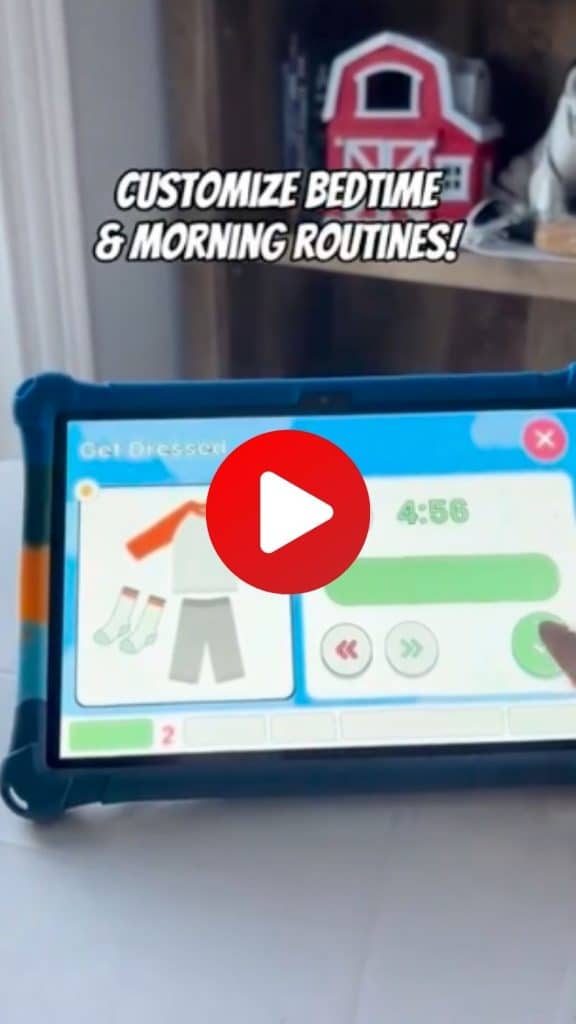
- Individualized Instruction. Goally can be easily customized to meet the specific needs of each child supporting the skills that they need most, at each child’s own pace.
- Increased Engagement. Goally is a fun and interactive tool that can help children stay engaged while learning.
- Improved Communication. Goally helps children learn to effectively communicate wants and needs, and allows children to participate in the world around them.
- Bonus: Goally’s Core Word Lessons teaches kids their first 50 words through video modeling and interactive practice.
Goally’s distraction-free kid’s tablet can be used as a therapy tool to help teach executive function, language, emotional regulation, finger dexterity skills, and more!
The ICD-10-CM is a critical tool for anyone with long-term medical diagnoses. As research progresses and our understanding of conditions evolves, the ICD will continue to be updated. The ICD-11 is already in the pipeline, with WHO member countries set to implement it in 2022. However, the United States isn’t expected to fully adopt it until later in the decade.
In ICD-11, autism is coded as 6A02 and is referred to as “autism spectrum disorder” instead of “autistic disorder.” The new range of codes from 6A02.0 to 6A02.5 indicates whether the individual has impaired intellectual development or functional language. Following the DSM-V’s lead, ICD-11 also includes Asperger’s syndrome under ASD.
We don’t know precisely when ICD-11 will be implemented in the U.S. or what modifications might be made. Nevertheless, understanding the ICD’s role is crucial. Whether ASD is coded as F84.0, 6A02, 299.0, or another code in the future, autistic individuals and their families represent a vibrant and supportive community.
Helpful Resources
For more information on ICD codes and autism, visit these credible websites:
- Centers for Disease Control and Prevention (CDC)
- World Health Organization (WHO) – ICD
- American Psychiatric Association – DSM
FAQ’s About Autistic Disorder ICD 10
What is the ICD-10 code for autism?
The ICD-10 code for autism is F84.0.

How is autism classified in the ICD-10?
Autism is classified under mental and behavioral disorders as a pervasive developmental disorder in the ICD-10.

Why is the ICD-10 code for autism important?
The ICD-10 code for autism is crucial for accurate diagnosis, treatment planning, and insurance billing.

What does the ICD-10 code F84.0 indicate?
The code F84.0 indicates a medical diagnosis of autistic disorder.

Can the ICD-10 code F84.0 be used for insurance claims?
Yes, the ICD-10 code F84.0 can be used for insurance claims to cover autism-related treatments.

Emily is a seasoned blog writer for Goally, leveraging her extensive background in child psychology and special education to provide valuable insights and resources for parents. Her commitment to understanding and addressing the unique needs of these children, combined with her expertise in educational strategies, makes her a credible and empathetic voice for families.