Choosing the right pediatric dentist is crucial for your child’s oral health and comfort. This guide explores Baltimore’s top pediatric dentists, answers common questions, and provides tips to help you make the best decision.
Key Takeaways:
- Top-rated pediatric dentists in Baltimore offer specialized care for kids of all ages, from infancy through teenage years.
- Early and regular dental visits are essential to prevent cavities and build positive dental habits.
- Goally can support children’s dental care routines with visual instructions, relaxation exercises, and a reward system.
Are you wondering, “What is the oldest age to see a pediatric dentist?” Pediatric dentists typically treat patients from infancy through their teenage years, often up to age 18. However, transitioning to a general dentist depends on individual comfort and specific needs, especially for children with special needs who may benefit from the familiar environment and expertise of their pediatric dentist.
Table of Contents
Top 5 Pediatric Dentists in Baltimore
Quality dental care can make all the difference in your child’s oral health. Some might even argue it’s a foundational pillar of their well-being. So, let’s dive straight into the top-notch clinics for a pediatric dentists in Baltimore.
| Name of Location | Star Rating | Number of Reviews | Address | Hours of Operation | Why Choose This One? |
|---|---|---|---|---|---|
| Dentistry for Children Maryland – Cross Keys | 4.8 | 834 | 2 Hamill Rd Suite 266 | Open ⋅ Closes 5 PM | Boasting the most reviews, this clinic is a popular choice, indicating high levels of parent satisfaction. |
| Greenspring Pediatric Dentistry | 4.8 | 502 | 2700 Quarry Lake Dr Suite 190 | Closed ⋅ Opens 8 AM Thu | Great for early risers, this clinic opens at 8 AM and offers a tranquil lake view to calm your child. |
| Dentist Near You | Apex Family Dentistry | Pediatric Dentist Maryland | 4.9 | 139 | Brooklyn, MD, United States | Open ⋅ Closes 5 PM | If the highest quality is your aim, this clinic has the best star rating of 4.9, albeit with fewer reviews. |
| Main Street Children’s Dentistry and Orthodontics of Perring Parkway | 4.8 | 310 | 8831 Satyr Hill Rd Ste 200 | Open ⋅ Closes 5 PM | This clinic is a one-stop shop, offering dentistry and orthodontic services to cover all your child’s dental needs. |
| Canton Dental Associates | 4.7 | 206 | 2700 Lighthouse Point E #210 | Open ⋅ Closes 5 PM | If proximity to the harbor appeals to you, this clinic is located near Lighthouse Point for a nautical touch. |
There’s no one-size-fits-all solution for pediatric dentists in Baltimore. Each clinic has unique features that may appeal to different families.
What is the Oldest Age to See a Pediatric Dentist?
Pediatric dentists specialize in treating patients from infancy through their teenage years. It’s common for kids to see a pediatric dentist until they’re about 18. They’re experienced in soothing your child’s fears and equipped to handle their changing dental needs.
However, transitioning to a general dentist depends largely on the child’s comfort and readiness. Sometimes, young adults with special needs might stick with their pediatric dentist a bit longer, given their familiar environment and the specific skill set of pediatric dentists.
Read more: My Autistic Child Won’t Brush Their Teeth | Parent’s Guide
What Do Pediatric Dentists Treat?
From dispensing sage advice on baby teeth care to sorting out teenager’s wisdom teeth, pediatric dentists cover the entire spectrum of children’s dental health. They’re your go-to professionals for routine check-ups, cleaning, fillings, braces—you name it!
That said, pediatric dentists in Baltimore work diligently with your kids, handling sensitive cases or behavioral problems with a gentle approach. They specialize in understanding kid-specific dental issues and can manage dental health problems in kids with special needs.

Read more: Should My Child See a Special Needs Dentist?
Can a 5-year-old Go To the Dentist?
Without a shadow of a doubt—yes! In fact, the American Academy of Pediatric Dentistry recommends that children go in for their first visit by their first birthday. By age 5, regular dental check-ups are already part of your child’s health routine.
Early visits keep cavities at bay and teach your child about the importance of good oral hygiene. More importantly, they become familiar with the dental clinic environment, helping to prevent dental anxieties later.
What Happens if You Don’t Fix a Child’s Cavity?
Ignoring a cavity, unfortunately, won’t make it go away. The cavity can worsen if left unattended, leading to severe pain, infection, and even tooth loss. It might affect your child’s eating habits, sleep, and school performance.
Moreover, untreated cavities can potentially affect the growth of permanent teeth. In due course, they require more complex and costly treatment. So, nip it in the bud early!
How Goally Can Help
Goally can help children learn how to brush their teeth properly and build a positive association with the dentist by providing visual instructions, relaxation exercises, and a reward system.
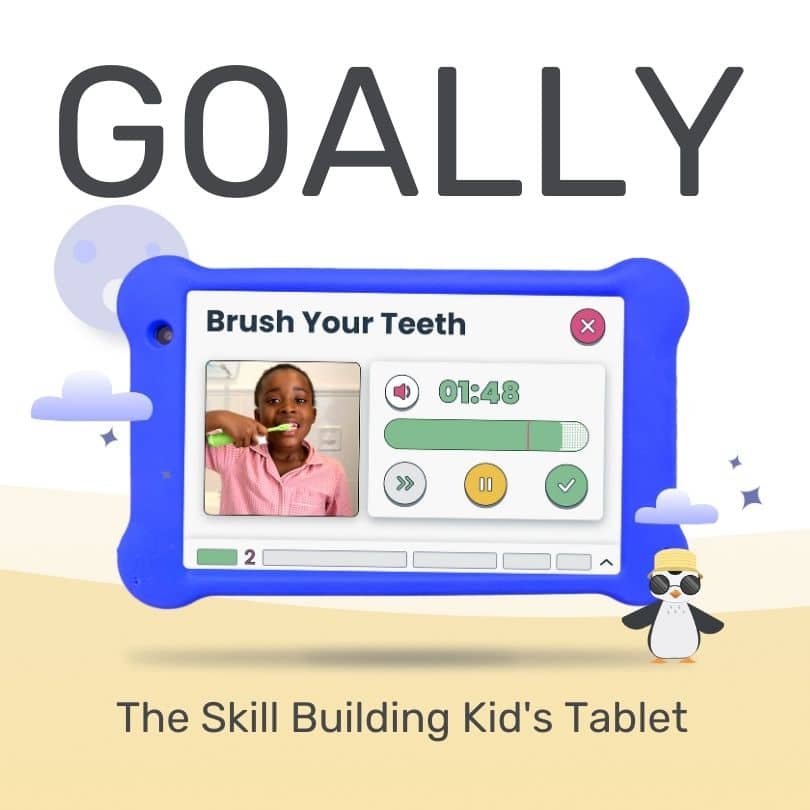
- Provides visual instructions for brushing their teeth that can be easily customized to the child’s specific needs, and are presented in a variety of ways (videos, image, text).
- Provides relaxation exercises to help kids who are anxious about going to the dentist to help children calm down and feel more in control.
- Tracks a child’s brushing habits and provide rewards for consistent brushing to help children stay motivated to brush their teeth regularly.
Goally’s distraction-free kid’s tablet can be used as a therapy tool to help teach executive function, language, emotional regulation, finger dexterity skills, and more!
We hope this blog aids you in finding the right pediatric dentist for your child in Baltimore. We wholeheartedly understand how parenting—especially of neurodivergent kids—can be a roller coaster ride filled with overwhelming love and continuous worry. That’s why at Goally, we strive to assist parents with resources that make your journey smoother. Our learning tablet for children aims to make the ride a little less bumpy by fostering your child’s independence with daily routines, supporting their emotional regulation, and more. When our kids shine, we do too. After all, we’re in this parenting journey together—supporting, guiding, and cheering each other on. So, let’s continue to share our experiences and insights, striving for growth and understanding in nurturing our kids. Remember, the smile of a child makes it all worthwhile!
Helpful Resources
- American Academy of Pediatric Dentistry (AAPD)
- MouthHealthy by the American Dental Association (ADA)
- Baltimore City Dental Society
FAQ’s About Pediatric Dentist in Baltimore
How often should my child visit a pediatric dentist?
It's recommended that children visit a pediatric dentist every six months for routine check-ups and cleanings. Regular visits help monitor your child’s dental health, prevent cavities, and ensure that any issues are addressed early.

At what age should my child have their first dental visit?
The American Academy of Pediatric Dentistry recommends that your child should have their first dental visit by their first birthday or within six months of their first tooth appearing. Early visits help establish a positive dental experience and prevent early tooth decay.

What should I expect during my child’s first dental visit?
During the first visit, the pediatric dentist will check your child’s teeth and gums, provide guidance on proper oral hygiene, and answer any questions you may have. The goal is to make the visit as comfortable and stress-free as possible for your child.

Can pediatric dentists treat children with special needs?
Yes, pediatric dentists are trained to work with children with special needs, providing a calm and accommodating environment. They use specific techniques to manage anxiety and ensure that all kids receive the best possible dental care.
This post was originally published on 08/23/2023. It was updated on 09/11/2024.

Hennah is an experienced writer and researcher, helping children with autism, ADHD, and other neurodivergent conditions. As a blog contributor for Goally, she combines her deep understanding of neurodiversity with practical advice, offering valuable insights to parents and educators.