The American Psychiatric Association (APA) Diagnostic and Statistical Manual of Mental Disorders (DSM) is the primary guide used by healthcare professionals in the United States and many other countries for diagnosing mental disorders.
In 2013, the APA published the fifth edition of the DSM (DSM-5), which specifies that an autism diagnosis requires ongoing deficits in social communication and interaction across various contexts. These deficits are demonstrated by issues in social-emotional reciprocity, nonverbal communication used for social interactions, and the ability to develop, maintain, and understand relationships. The full DSM-5 diagnostic criteria for Autism Spectrum Disorder (ASD) are listed below.
In 2022, the APA released the DSM-5-TR, a text revision of the DSM-5, which clarified the autism diagnostic criteria. Specifically, the phrase “manifested by the following” was updated to “as manifested by all of the following” to enhance clarity.
Table of Contents
Autism Spectrum Disorder DSM-5 Diagnostic Criteria: Full Text
A. Persistent deficits in social communication and social interaction across multiple contexts, as manifested by the following, currently or by history (examples are illustrative, not exhaustive):
- Deficits in social-emotional reciprocity, ranging from abnormal social approach and failure of normal back-and-forth conversation to reduced sharing of interests, emotions, or affect to failure to initiate or respond to social interactions.
- Deficits in nonverbal communicative behaviors used for social interaction, ranging from poorly integrated verbal and nonverbal communication to abnormalities in eye contact and body language or deficits in understanding and use of gestures to a total lack of facial expressions and nonverbal communication.
- Deficits in developing, maintaining, and understanding relationships, ranging from difficulties adjusting behavior to suit various social contexts to difficulties in sharing imaginative play or in making friends to the absence of interest in peers.
Specify current severity: Severity is based on social communication impairments and restricted repetitive behavior patterns.
B. Restricted, repetitive patterns of behavior, interests, or activities, as manifested by at least two of the following, currently or by history (examples are illustrative, not exhaustive):
- Stereotyped or repetitive motor movements, use of objects, or speech (e.g., simple motor stereotypies, lining up toys or flipping objects, echolalia, idiosyncratic phrases).
- Insistence on sameness, inflexible adherence to routines, ritualized patterns, or verbal nonverbal behavior (e.g., extreme distress at small changes, difficulties with transitions, rigid thinking patterns, greeting rituals, need to take the same route or eating food every day).
- Highly restricted, fixated interests that are abnormal in intensity or focus (e.g., strong attachment to or preoccupation with unusual objects, excessively circumscribed or perseverative interest).
- Hyper- or hyporeactivity to sensory input or unusual interests in sensory aspects of the environment (e.g., apparent indifference to pain/temperature, adverse response to specific sounds or textures, excessive smelling or touching of objects, visual fascination with lights or movement).
Specify current severity: Severity is based on social communication impairments and restricted repetitive behavior patterns.
C. Symptoms must be present in the early developmental period (but may not fully manifest until social demands exceed limited capacities or may be masked by learned strategies in later life).
D. Symptoms cause clinically significant impairment in social, occupational, or other important areas of current functioning.
E. These disturbances are not better explained by intellectual disability (intellectual developmental disorder) or global developmental delay. Intellectual disability and autism spectrum disorder frequently co-occur; to make comorbid diagnoses of autism spectrum disorder and intellectual disability, social communication should be below that expected for general developmental level.
Note: Individuals with a well-established DSM-IV diagnosis of autistic disorder, Asperger’s disorder, or pervasive developmental disorder not otherwise specified should be given the diagnosis of autism spectrum disorder. Individuals who have marked deficits in social communication but whose symptoms do not otherwise meet the criteria for autism spectrum disorder should be evaluated for social (pragmatic) communication disorder.
Specify if:
- With or without accompanying intellectual impairment
- With or without accompanying language impairment (Coding note: Use additional code to identify the associated medical or genetic condition.)
- Associated with another neurodevelopmental, mental, or behavioral disorder (Coding note: Use additional code(s) to identify the associated neurodevelopmental, mental, or behavioral disorder(s).)
- With catatonia
- Associated with a known medical or genetic condition or environmental factor

Social (Pragmatic) Communication Disorder DSM-5 Diagnostic Criteria
A. Persistent difficulties in the social use of verbal and nonverbal communication as manifested by all of the following:
- Deficits in using communication for social purposes, such as greeting and sharing information, in a manner appropriate for the social context.
- Impairment of the ability to change communication to match context or the listener’s needs, such as speaking differently in a classroom than on the playground, talking differently to a child than to an adult, and avoiding overly formal language.
- Difficulties following rules for conversation and storytelling, such as taking turns, rephrasing when misunderstood, and knowing how to use verbal and nonverbal signals to regulate interaction.
- Difficulties understanding what is not explicitly stated (e.g., making inferences) and nonliteral or ambiguous meanings of language (e.g., idioms, humor, metaphors, multiple meanings that depend on the context for interpretation).
B. The deficits result in functional limitations in effective communication, social participation, social relationships, academic achievement, or occupational performance, individually or in combination.
C. The onset of the symptoms is in the early developmental period (but deficits may not fully manifest until social communication demands exceed limited capacities).
D. The symptoms are not attributable to another medical or neurological condition or to low abilities in the domains of word structure and grammar and are not better explained by autism spectrum disorder, intellectual disability (intellectual developmental disorder), global developmental delay, or another mental disorder.
Goally is a valuable resource for clinicians who are looking for ways to support children with speech and language problems.
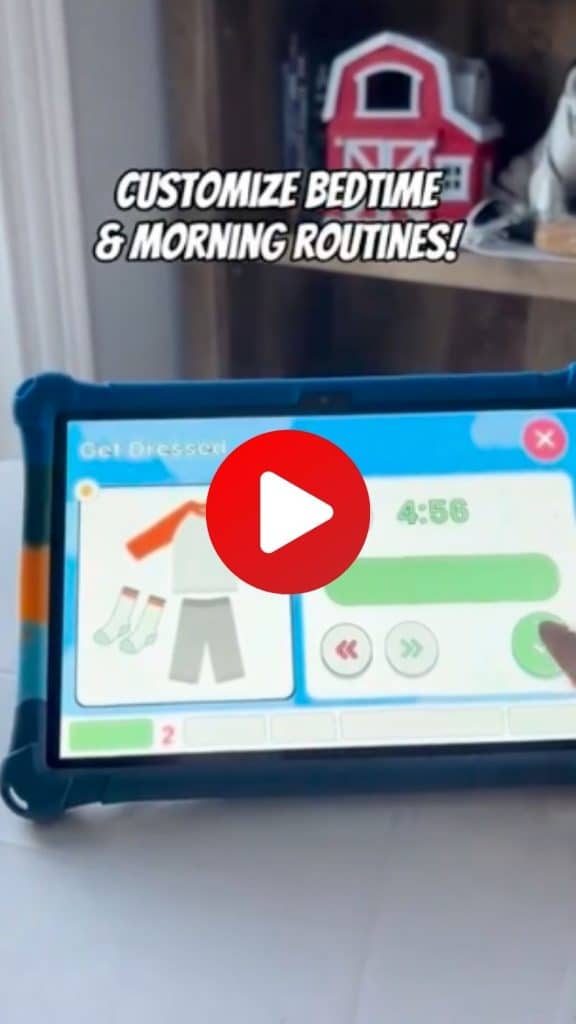
- Individualized Instruction. Goally can be easily customized to meet the specific needs of each child supporting the skills that they need most, at each child’s own pace.
- Increased Engagement. Goally is a fun and interactive tool that can help children stay engaged while learning.
- Improved Communication. Goally helps children learn to effectively communicate wants and needs, and allows children to participate in the world around them.
- Bonus: Goally’s Core Word Lessons teaches kids their first 50 words through video modeling and interactive practice.
Goally’s distraction-free kid’s tablet can be used as a therapy tool to help teach executive function, language, emotional regulation, finger dexterity skills, and more!
Helpful Resources
- American Psychological Association
- Centers for Disease Control and Prevention
- National Institute of Mental Health
FAQ’s About DSM 5 Autism
What is DSM-5 autism?
DSM-5 autism refers to the diagnostic criteria for Autism Spectrum Disorder outlined in the fifth edition of the Diagnostic and Statistical Manual of Mental Disorders.

What are the main criteria for diagnosing autism according to DSM-5?
The main criteria include persistent deficits in social communication and interaction, and restricted, repetitive patterns of behavior, interests, or activities.

How does DSM-5 define social communication deficits in autism?
Social communication deficits include challenges in social-emotional reciprocity, nonverbal communication, and developing, maintaining, and understanding relationships.

What does DSM-5 say about repetitive behaviors in autism?
Repetitive behaviors can include motor movements, use of objects, speech, insistence on sameness, highly restricted interests, and hyper- or hyporeactivity to sensory input.

When should autism symptoms be present according to DSM-5?
Autism symptoms must be present in the early developmental period but may not become fully manifest until social demands exceed limited capacities.

Emily is a seasoned blog writer for Goally, leveraging her extensive background in child psychology and special education to provide valuable insights and resources for parents. Her commitment to understanding and addressing the unique needs of these children, combined with her expertise in educational strategies, makes her a credible and empathetic voice for families.