Trusted by over 100,000+ Parents

What is Emotional Management?

Home>>Neurodiversopedia>>E Terms

Summary

summary

Emotional management is the ability to understand and control your feelings in a healthy way. It’s an important skill for kids to learn, especially those with special needs who may struggle more with handling their emotions.

Frequently Asked Question

donut

Why is emotional management important for kids with special needs?

Emotional management helps children with special needs regulate their feelings and respond appropriately to challenges. It promotes better mental health and relationships.

What are some common emotional management techniques?

Common techniques include deep breathing, using “I feel” statements, creating a calm down kit, and reframing negative thoughts. Identifying triggers and problem-solving strategies are also helpful.

How can parents help their child practice emotional management?

Parents can model healthy emotional expression, teach calming strategies, and role-play scenarios with their child. Providing a supportive, understanding environment is key.

When should I seek professional help for my child's emotional issues?

If your child’s emotional difficulties are severely impacting their daily functioning, relationships, or academic performance, consult with a mental health professional. They can provide therapy and additional support.

Scientific Definition

scientist

Emotional management refers to the cognitive processes involved in monitoring, evaluating, and modulating one’s emotional reactions to achieve desired states or goals. For neurodivergent children, difficulties with emotional regulation are common and can lead to behavioral challenges. Developing effective emotional management skills is crucial for promoting mental well-being and adaptive functioning.

 

Resources:

Real World Example of Emotional Management

Meet Charlie, a bright 8-year-old with ADHD who often struggles to manage his emotions. Here’s how emotional management strategies helped him:

Strategy Description
Deep Breathing and Counting Whenever frustration bubbled up, Charlie learned the technique of taking deep breaths and counting to 10. This simple practice helped him to pause, calm down, and approach situations more thoughtfully rather than reacting impulsively.
“I Feel” Statements To express his emotions constructively and without aggression, Charlie adopted the use of “I feel” statements. Saying things like, “I feel angry when you take my toy without asking,” allowed him to communicate his feelings clearly and calmly, fostering better understanding and less conflict with others.
Calm Down Kit Charlie’s therapist introduced a personalized “calm down kit” filled with items designed to soothe and distract him during moments of distress. This kit included fidget toys, coloring pages, and a feelings chart to help him identify and articulate his emotions accurately.
Role-Playing Scenarios Through role-playing different situations with his therapist and parents, Charlie practiced responding to common triggers, such as losing a game or receiving a bad grade, in healthier ways. This not only prepared him for real-life scenarios but also helped him internalize positive coping mechanisms.

Thanks to these emotional management strategies, Charlie began to see significant improvements in his ability to understand and regulate his emotions. This had a ripple effect, enhancing his mood, strengthening his relationships with family and friends, and boosting his overall well-being.

How Does Emotional Management Work?

Emotional management involves skills and strategies to regulate your feelings constructively. Some key aspects include:

  1. Identifying and Labeling Emotions: Recognizing what you’re feeling and being able to name it is the first step toward managing emotions. This awareness can help children understand their emotional responses to various situations.
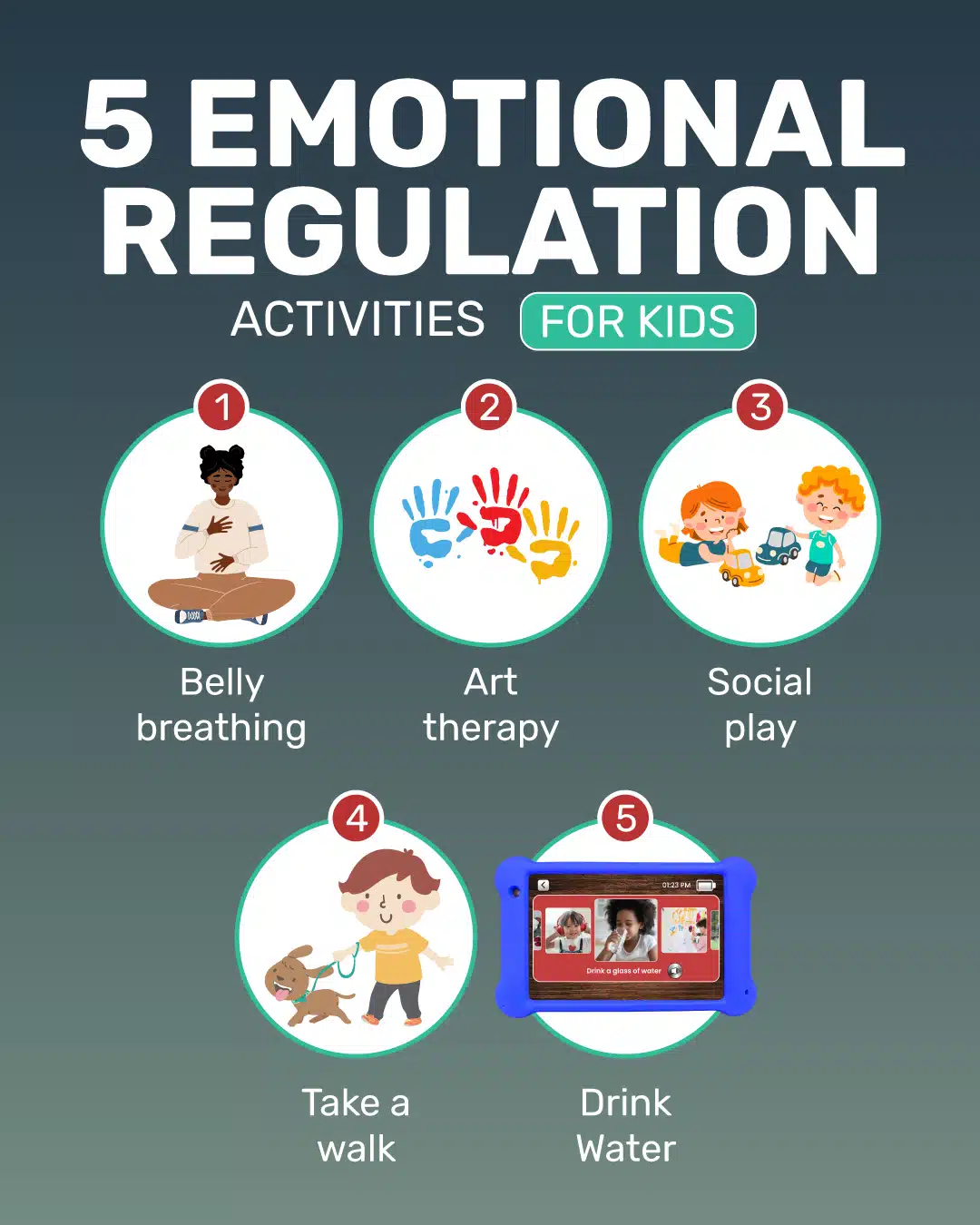
  2. Using Calming Techniques: Techniques such as deep breathing, meditation, or mindfulness can help calm the mind and reduce feelings of anxiety or stress. Teaching children these techniques can be a valuable part of their emotional toolkit.
  3. Expressing Feelings Appropriately: Encouraging the use of “I” statements (like “I feel sad when…”) helps children express their emotions clearly and non-confrontationally. This can lead to healthier communication and relationships.
  4. Reframing Negative Thoughts: Teaching children to challenge and change negative thoughts into more positive or realistic ones can significantly impact their emotional wellbeing. 
  5. Problem-Solving to Address Triggers: Identifying what triggers negative emotions and developing strategies to deal with these triggers can prevent emotional overreactions. This involves problem-solving skills and critical thinking.
  6. Practicing Self-Care with Enjoyable Activities: Encouraging children to engage in enjoyable activities can boost their mood and serve as a healthy distraction from negative emotions. Whether it’s a hobby, exercise, or spending time with friends, self-care is important to emotional wellbeing.

Developing these emotional management skills can be remarkably empowering for children with special needs. With patience, practice, and support from caregivers and professionals, these children can build a comprehensive toolkit for navigating their emotional worlds.