

As a childcare professional, I’ve seen firsthand how crucial it is for kids to develop healthy coping mechanisms. Today, I’m excited to share a comprehensive coping skills list that can help your children navigate their emotions more effectively. These strategies aren’t just theoretical – they’re tried and tested techniques that I’ve seen work wonders in real-life situations with kids.
Table of Contents
Key Takeaways:
- Coping skills are essential tools for children to manage stress and emotions
- Effective coping strategies include deep breathing, mindfulness, and physical activities
- Consistent practice and parental support are crucial for developing strong coping abilities
What are coping skills for children and why are they important? Coping skills are techniques that help children manage stress, anxiety, and overwhelming emotions. They’re crucial for developing emotional resilience, improving mental health, and enhancing overall well-being. By learning these skills early, kids are better equipped to handle life’s challenges as they grow.
1. Deep Breathing Exercises
Deep breathing is a cornerstone of any effective coping skills list. It’s a simple yet powerful technique that can help kids calm down quickly when they’re feeling overwhelmed.
I once worked with a 7-year-old boy who struggled with anxiety before tests. We practiced a fun deep breathing exercise called “Balloon Breaths.” He’d imagine inflating a balloon in his favorite color as he inhaled slowly, then picture it floating away as he exhaled. Within weeks, his test anxiety significantly decreased.
To try this at home:
- Have your child place one hand on their chest and the other on their belly
- Guide them to take a slow, deep breath in through their nose, feeling their belly expand
- Then, have them exhale slowly through their mouth, feeling their belly deflate
- Repeat this process 5-10 times
Encourage your kids to practice this technique regularly, not just when they’re stressed. The more familiar they are with deep breathing, the more effective it’ll be when they really need it.
2. Mindfulness and Meditation
Mindfulness is another powerful tool in our coping skills list. It helps children stay present and manage racing thoughts or worries about the future.
A study published in the Journal of Child and Family Studies found that mindfulness-based interventions can significantly reduce anxiety symptoms in children (Semple et al., 2010). I’ve seen this play out in real-time with the kids I work with.
Here’s a simple mindfulness exercise you can try with your children:
- Find a quiet space and sit comfortably
- Ask your child to close their eyes and focus on their breathing
- Guide them to notice any thoughts that come up, without judging them
- Encourage them to let these thoughts float away, like clouds in the sky
- Start with just 2-3 minutes and gradually increase the duration
Remember, consistency is key. Even a few minutes of mindfulness practice each day can make a big difference in your child’s ability to cope with stress.

Read more: How Can I Teach Coping Skills to My Kid?
3. Physical Activity and Movement
Physical activity is a fantastic way for kids to release pent-up energy and emotions. It’s an essential component of any comprehensive coping skills list.
I’ve seen remarkable changes in children who incorporate regular physical activity into their routines. One 9-year-old girl I worked with struggled with anger management. We introduced a “dance it out” technique where she’d put on her favorite music and dance wildly whenever she felt angry. It became her go-to coping mechanism, helping her express and release her emotions in a healthy way.
Here are some ideas to get your kids moving:
- Have a family dance party
- Go for a bike ride or a nature walk
- Play active games like tag or hide-and-seek
- Try yoga poses designed for kids
The key is to find physical activities that your child enjoys. This way, they’re more likely to use this coping skill when they need it.
4. Creative Expression
Art and creative activities can be powerful outlets for emotions, making them valuable additions to our coping skills list. They provide a non-verbal way for kids to express feelings they might struggle to put into words.
I once worked with a 6-year-old who had difficulty expressing her emotions verbally. We introduced a “feelings journal” where she could draw or paint her emotions each day. Over time, this not only helped her process her feelings but also gave us a visual way to discuss her emotional experiences.
Here are some creative coping activities to try:
- Keep a drawing journal for emotions
- Create a “calm down” coloring box with coloring books and art supplies
- Make a feelings collage using magazine cutouts
- Try finger painting to express emotions through color and texture
Encourage your child to engage in these activities regularly, not just when they’re feeling stressed. This helps normalize the process of emotional expression through creativity.
5. Positive Self-Talk
Teaching children to use positive self-talk is a crucial part of any effective coping skills list. It helps kids reframe negative thoughts and build self-confidence.
Here’s how you can help your child develop positive self-talk:
- Help them identify negative self-talk patterns
- Work together to create positive alternatives
- Practice using these positive phrases regularly
- Encourage them to be their own cheerleader
Remember, changing thought patterns takes time and practice. Be patient and celebrate small victories along the way.
Goally | 100+ Streaming Video Classes
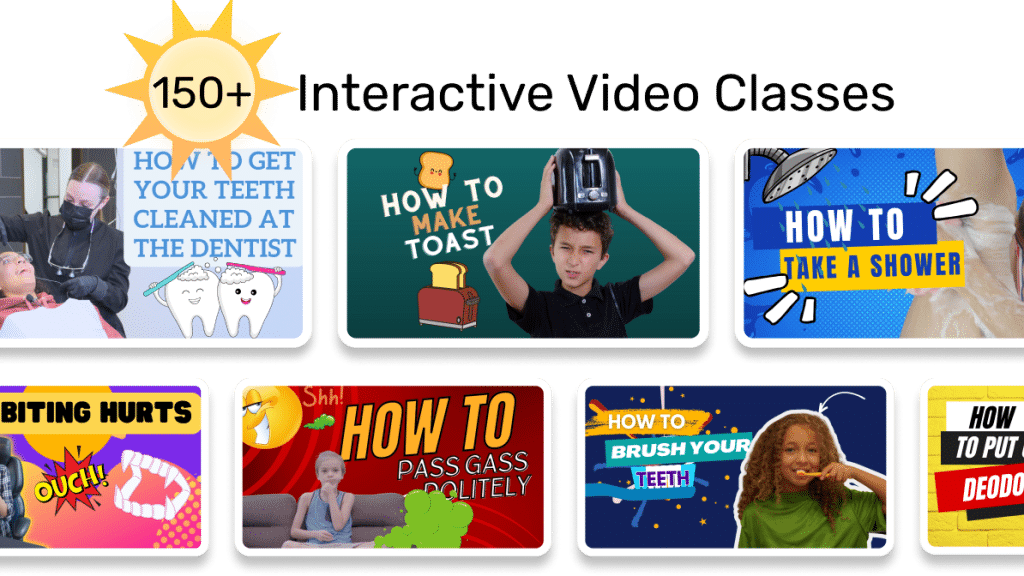
Does your child need some extra guidance on building essential life skills? Goally’s skill building tablet for kids includes a TV app that has the most robust video library of skills training videos for kids. Ranging from content like “How to Brush Your Teeth” to “How to Make Friends at School,” we have dozens of interactive video lessons for kids with thinking and learning differences.
HERE’s a video explaining how to works.
These five coping skills form a powerful toolkit for helping children manage their emotions and stress. As you introduce these techniques to your kids, remember that every child is unique. What works best for one might not be as effective for another. The key is to experiment, be patient, and keep the process fun and engaging.
In my experience, the most successful approach is to integrate these coping skills into daily life, rather than only using them in moments of stress. Make deep breathing a part of the bedtime routine, practice mindfulness during car rides, or have a daily dance party. By making these skills a regular part of your child’s life, you’re helping them build resilience and emotional intelligence that will serve them well into adulthood.
Remember, you’re not just teaching coping skills – you’re empowering your child with lifelong tools for emotional well-being. And that’s one of the greatest gifts you can give as a parent.
Helpful Resources
- Child Mind Institute
- Understood
- Very Well Family
FAQ’s About Coping Skills List
How can coping skills benefit children?
Coping skills help children manage stress, regulate emotions, and build resilience for life's challenges.

What are some easy coping skills for kids to learn?
Deep breathing, mindfulness, physical activity, creative expression, and positive self-talk are effective and easy-to-learn coping skills for children.

How can parents teach coping skills to their children?
Parents can model coping skills, practice them together, and incorporate them into daily routines.

At what age should children start learning coping skills?
Children can start learning simple coping skills as early as preschool age, around 3-4 years old.

How long does it take for children to master coping skills?
Mastering coping skills is an ongoing process, but with consistent practice, children can see improvements in a few weeks to a few months.

Emily is a seasoned blog writer for Goally, leveraging her extensive background in child psychology and special education to provide valuable insights and resources for parents. Her commitment to understanding and addressing the unique needs of these children, combined with her expertise in educational strategies, makes her a credible and empathetic voice for families.




