As someone who works with kids, especially those who are neurodivergent or have learning differences, I know firsthand how powerful social stories can be for helping with emotional regulation. Suppose you’re a parent of a child who struggles with big feelings or challenging behaviors. In that case, social stories are an incredibly effective tool in your toolkit. They provide relatable examples, easy-to-understand language, and memorable visuals to teach essential skills in a way that really resonates with kids. In this article, I’m sharing my top 10 favorite social stories for emotional regulation. These are the ones I’ve found to be the most helpful and engaging for the kids I work with. Each story focuses on a specific aspect of emotional regulation, like identifying feelings, calming down strategies, flexible thinking, and more. Whether you have a preschooler working on learning basic feeling words or an older child who needs support navigating tricky social situations, there’s a story here that can help.
Table of Contents
1. The Zones of Regulation
The Zones of Regulation is a classic social story that teaches kids to categorize their feelings and energy levels into four colored “zones.” The Blue Zone is when you feel sad, sick, tired, or bored. The Green Zone is when you feel happy, calm, and focused. The Yellow Zone is when you feel frustrated, worried, silly, or excited. And the Red Zone is when you feel mad, terrified, or out of control.
I love using the Zones with kids because it gives them a simple, non-judgmental way to identify their feelings. No emotion is portrayed as “bad” or “wrong.” The Zones also come with a range of strategies kids can use to help them get back to or stay in the Green Zone. With practice, kids learn to recognize their zone and pick a tool to regulate their feelings as needed.
2. Tucker Turtle Takes Time to Tuck and Think
Tucker Turtle is an adorable story that teaches kids how to manage anger and frustration. When Tucker gets upset, he “tucks” inside his shell, takes deep breaths, and “thinks” about how to solve his problem peacefully. The story gives memorable anger management strategies like stop, tuck, and breathe.
I find Tucker Turtle so effective because it normalizes feeling angry. The story clarifies that it’s okay to be mad sometimes – how you handle those big feelings matters. Kids easily remember the “tuck and think” strategy and can apply it in real-life situations when they get frustrated or overwhelmed.
Goally | The Tablet for Neurodiverse Kids

3. Soda Pop Head: Anger Management for Kids
Soda Pop Head is a super engaging social story that uses the memorable analogy of a shaken soda pop bottle to talk about anger. As Soda Pop Head experiences frustrating situations, the “fizz” builds up inside him until he finally explodes! The story then teaches techniques like belly breathing and positive self-talk to help manage those fizzy feelings.
This story resonates with kids struggling with considerable, explosive anger. The soda pop analogy makes the concepts very concrete and relatable. Kids learn to address upset feelings early before the “fizz” gets out of control. The techniques in the story are practical and kid-friendly.
4. My Mouth Is A Volcano
This cute story is perfect for chatty kids who struggle with impulsivity and interrupting others. The main character, Louis, has so much to say that the words “erupt” out of his mouth like a volcano! But with practice and some self-control strategies, Louis learns to wait for his turn to talk and let others share, too.
I love the colorful visuals in this book. How it portrays impulsive talking in a kid-friendly way, kids can understand. The strategies Louis learns, like taking belly breaths and counting in his head, are helpful tools kids can use to work on self-control. It also promotes empathy by highlighting how others feel when interrupted.

Read more: How to Teach Self-Control to Your Child
5. What Were You Thinking? Learning to Control Your Impulses
This social story is great for helping impulsive kids stop and think before acting. It starts by explaining how everyone has “brakes” in their brain to help control impulses. Then, it introduces the memorable “What Were You Thinking” strategy to engage those mental brakes. Before acting on an impulse, kids ask themselves, “What will happen if I do this? Is it a good idea? Is it safe?” This private self-talk helps them make positive choices.
I find this story compelling because it helps kids understand why it’s essential to control impulses and gives them a simple script to reason through their choices. Encouraging self-control self-talk is a powerful way to build a child’s flexible thinking and decision-making skills. The story gives lots of example scenarios kids can relate to.
6. When I Feel Worried
Anxiety is increasingly common in kids today. This gentle, supportive story validates how worry can appear and provides coping tools to help. It normalizes that everyone feels worried sometimes, and there are helpful things you can do to feel better, like belly breathing, thinking positive thoughts, and talking to someone you trust.
Kids who struggle with anxiety often feel alone in their worries. I love how this book reminds them that their feelings are normal and there are constructive ways to cope with anxious thoughts. It provides a jumping-off point for important conversations about identifying and managing worry healthily.

7. Wilma Jean the Worry Machine
For kids with more significant anxiety, Wilma Jean offers an in-depth look at how worry can really take hold – and how to break free. Wilma Jean worries about everything from being late to her broken toy to her dog getting lost. Her worries follow her around like the “Worry Machine” until she learns strategies to “unplug” from the machine and talk back about her worries.
This book shows how worry can feel all-consuming for some kids and how it can impact daily life. I appreciate the range of coping tools shared and how the book models self-talk kids can use to challenge worried thoughts. It’s a practical primer for taking control of anxiety.
8. What to Do When You Worry Too Much
This interactive self-help book is a favorite of mine for elementary-aged kids struggling with anxiety or OCD. It offers a step-by-step approach for recognizing worries and developing practical coping skills. The book includes activities like writing down your worries, reframing worried thoughts, relaxation exercises, and facing fears gradually.
While this book requires more time and attention than a typical story, I’ve seen it greatly impact kids who engage with the content. It demystifies the anxiety cycle and empowers kids to swap worried thoughts for more realistic ones. The action-oriented guide encourages kids to practice their new coping skills regularly. It’s a well-researched resource grounded in cognitive behavioral principles.
9. Train Your Angry Dragon
This lighthearted story uses the relatable analogy of an “angry dragon” living inside us to help kids learn to manage their anger. It follows a boy as he “trains his dragon” using proven self-regulation techniques like counting to 10, belly breathing, positive self-talk, and more. With practice, the boy and his dragon develop a close bond and learn to tame angry outbursts together.
Using the angry dragon character makes the concepts of this book very engaging and memorable for kids. I appreciate how it focuses on anger as something to understand and work with, not suppress or deny. The coping tools are well-explained and practical. It’s an upbeat introduction to anger management.
10. How to Be A Superhero Called Self-Control!
Kids who struggle with impulse control will love this social story that frames self-regulation skills as “superpowers!” The main character learns to handle frustration, calm down, and make good choices using his newly developed self-control superpowers. Memorable strategies include the Power Breath, the Pause Button, and Consistency.
Framing self-control as a superpower is a fun and practical approach. It helps kids reframe learning these skills as positive and exciting rather than punitive. I’ve found kids are very motivated to practice their self-regulation “powers” after reading this story. The language is empowering and easy to understand.
Goally | Kid’s Tablet for Building Emotional Regulation Skills
Is your child struggling with understanding and managing their emotions? Goally teaches emotional regulation skills in a fun and interactive way!
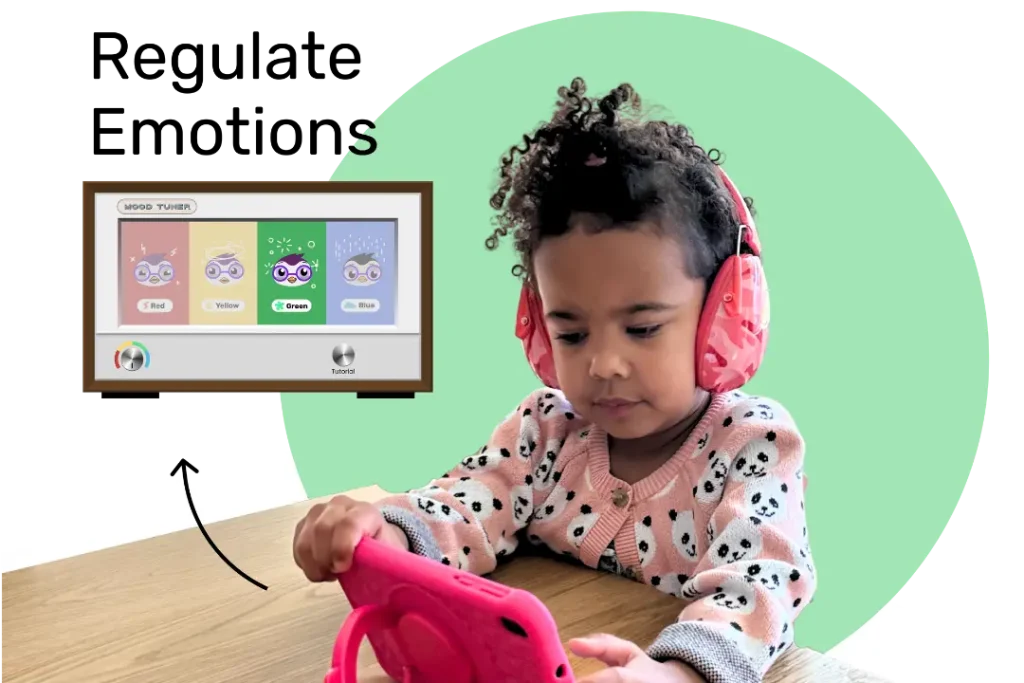
The Mood Tuner app encourages kids to look inwards and identify their feelings, helping them understand what’s going on inside. Once they’ve recognized their emotions, they can choose from a variety of exercises designed to help them self-regulate and find their balance.
This curated list of social stories for emotional regulation gives you a starting point for finding resources to help the neurodivergent kids in your life. Remember, social stories work best when used consistently and paired with chances to practice real-life skills. With repetition, kids can internalize the language and strategies to regulate their emotions more independently. Every child is unique in what types of stories and strategies resonate with them. Feel free to try different approaches to find the best fit. The goal is always to empower kids to understand their emotions and healthily respond to them. With the right tools and support, kids of all backgrounds and abilities can learn to thrive emotionally. As a professional who has seen the positive impact of social stories firsthand, I’m excited for you to share these incredible resources with your child!
Helpful Resources:
FAQ’s About Social Stories for Emotional Regulation
What are social stories?
Social stories are brief, simple stories that describe social situations, experiences, or behaviors to help kids understand and navigate them more effectively.

How do social stories help with emotional regulation?
Social stories provide clear, concise explanations of emotional situations and offer coping strategies, helping kids learn to recognize and manage their feelings in a healthy way.

What are some examples of social stories for emotional regulation?
Some popular social stories for emotional regulation include "The Zones of Regulation," "Tucker Turtle Takes Time to Tuck and Think," and "Soda Pop Head: Anger Management for Kids."

How do I use social stories with my child?
Read the social story with your child regularly, discussing the content and practicing the strategies together, then encourage them to apply the skills in real-life situations with your support.

What age are social stories appropriate for?
Social stories can be beneficial for kids of various ages, but they are typically used with children in preschool through elementary school, or sometimes with older kids who have special needs.

Emily is a seasoned blog writer for Goally, leveraging her extensive background in child psychology and special education to provide valuable insights and resources for parents. Her commitment to understanding and addressing the unique needs of these children, combined with her expertise in educational strategies, makes her a credible and empathetic voice for families.