Emotional dysregulation is when a kid with ADHD struggles to manage their feelings. They might react too strongly or not enough to things around them.



Emotional dysregulation is when a kid with ADHD struggles to manage their feelings. They might react too strongly or not enough to things around them.


What is emotional dysregulation in ADHD?
It’s when a kid with ADHD has a hard time managing their feelings, reacting too strongly or not enough to things around them.
How common is emotional dysregulation in kids with ADHD?
Studies show that about 50-70% of kids with ADHD experience emotional dysregulation.
What are some signs of emotional dysregulation in a child with ADHD?
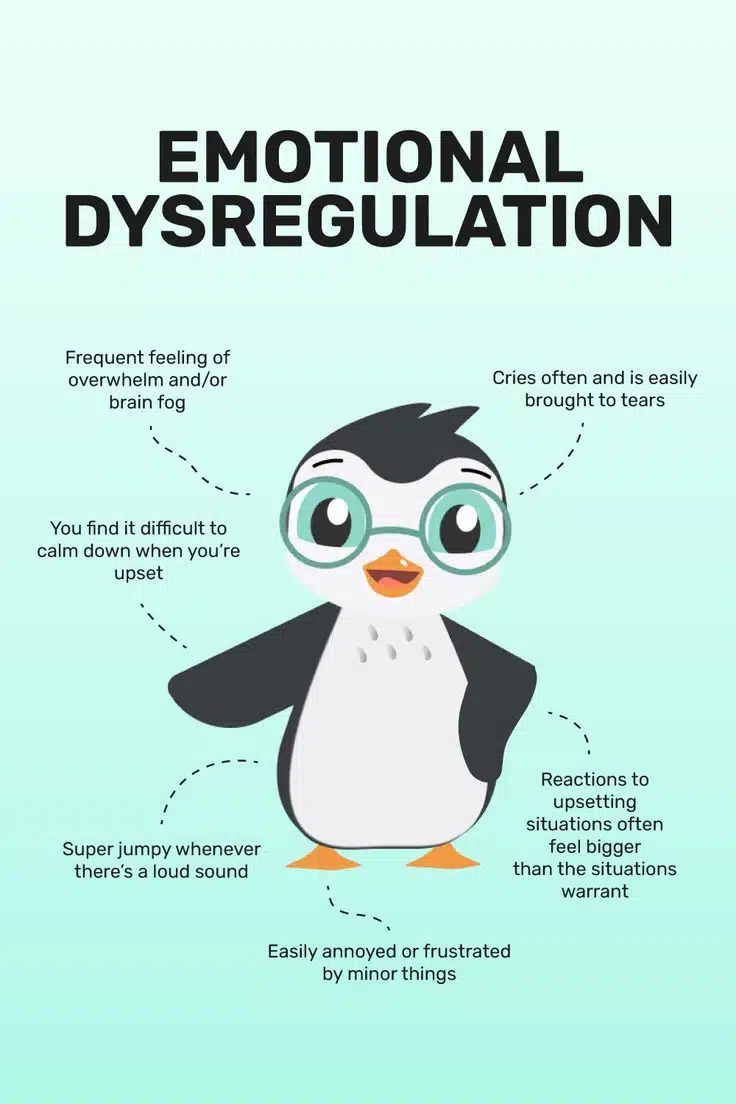
Signs can include overreacting to minor issues, difficulty calming down after an emotional outburst, and inappropriate emotional responses.
How can parents help a child with ADHD and emotional dysregulation?
Parents can help by understanding these patterns and guiding their kids towards healthier ways to express their feelings.


Emotional dysregulation in children with ADHD refers to trouble managing emotional responses to everyday situations. This means a child may have strong emotional reactions, take longer to calm down, or respond in ways that don’t match the situation. It’s not just about mood swings—it’s a difficulty with emotional control that affects how they interact with others and handle frustration.

Emotional dysregulation in ADHD is often seen in the way kids react to everyday situations. It’s like their emotional responses are turned up to the max. Here are some examples:
Understanding these patterns can help parents better support their kids. It’s not about stifling emotions but guiding them towards healthier ways to express them. Remember, every kid is unique, and so is their journey with ADHD and emotional dysregulation.