A bike helmet is essential for keeping kids safe while riding. This guide shows how to wear a bike helmet properly, ensuring maximum protection.
- Ensure the helmet fits snugly without being too tight.
- Position the helmet correctly on the forehead, not tilted back.
- Adjust the straps to form a “V” under each ear.
- Secure the buckle under the chin, leaving enough room for comfort.
How do you wear a bike helmet properly? Ensure the helmet sits level on the head, covering the forehead, with the straps adjusted to form a snug fit under the ears and chin. Regularly check the fit and adjust as needed to maintain safety.
Table of Contents
Step 1: Choose the Right Helmet
Before you even start adjusting, the first step is selecting the right helmet for your child. Look for helmets that are CPSC certified, meaning they meet the safety standards set by the Consumer Product Safety Commission. The helmet should fit your child’s head shape and size. A helmet that’s too large or small won’t offer the proper protection. Check for fit by having your child try it on. The helmet should sit snugly without feeling tight, and it shouldn’t wobble when they shake their head. Make sure to involve your child in the process so they feel comfortable and excited about wearing it.
Step 2: Position the Helmet Correctly
Positioning the helmet correctly on the head is crucial. It should sit level, not tilted back or too low on the forehead. A good rule of thumb is that the front of the helmet should be about two fingers above the eyebrows. This ensures that the forehead is covered, which is essential in protecting against head injuries. An incorrectly positioned helmet can reduce the effectiveness of the safety features, so always take a moment to adjust before each ride.
Step 3: Adjust the Side Straps
Once the helmet is in the right position, focus on the side straps. These straps should form a “V” shape just under each ear. Adjust the straps so the “V” is snug and holds the helmet in place without being too tight. You want the straps to be secure enough to keep the helmet stable but comfortable enough that your child won’t feel constricted. If the straps are too loose, the helmet could shift during a fall, putting your child at risk.

Read more: Bike Safety | Guide for Parents
Step 4: Buckle the Chin Strap
The chin strap is the last line of defense in securing the helmet. Buckle it under your child’s chin and adjust it so there’s no more than one or two fingers’ worth of space between the strap and their skin. The strap should be tight enough that the helmet doesn’t move when they open their mouth, but not so tight that it’s uncomfortable or restricts movement. Encourage your child to practice buckling and unbuckling the strap to make the process second nature.
Step 5: Perform a Helmet Fit Test
After adjusting the helmet, it’s time for a fit test. Ask your child to shake their head up and down, side to side. The helmet should stay in place without shifting. If it moves, readjust the straps or helmet position. Make this test a regular part of the routine before every ride. Ensuring a proper fit each time will keep your child safe and comfortable, making wearing the helmet a natural part of their biking experience.
Step 6: Check Regularly and Replace as Needed
Helmets aren’t meant to last forever. Check the helmet regularly for signs of wear and tear, such as cracks or worn straps. If your child has outgrown their helmet or it has been involved in a crash, it’s time for a replacement. Regular inspections help ensure that your child’s helmet remains effective and safe for every ride.
Goally | 100+ Streaming Video Classes
Does your child need some extra guidance on building essential life skills? Goally’s skill building tablet for kids includes a TV app that has the most robust video library of skills training videos for kids. Ranging from content like “How to Brush Your Teeth” to “How to Make Friends at School,” we have dozens of interactive video lessons for kids with thinking and learning differences.
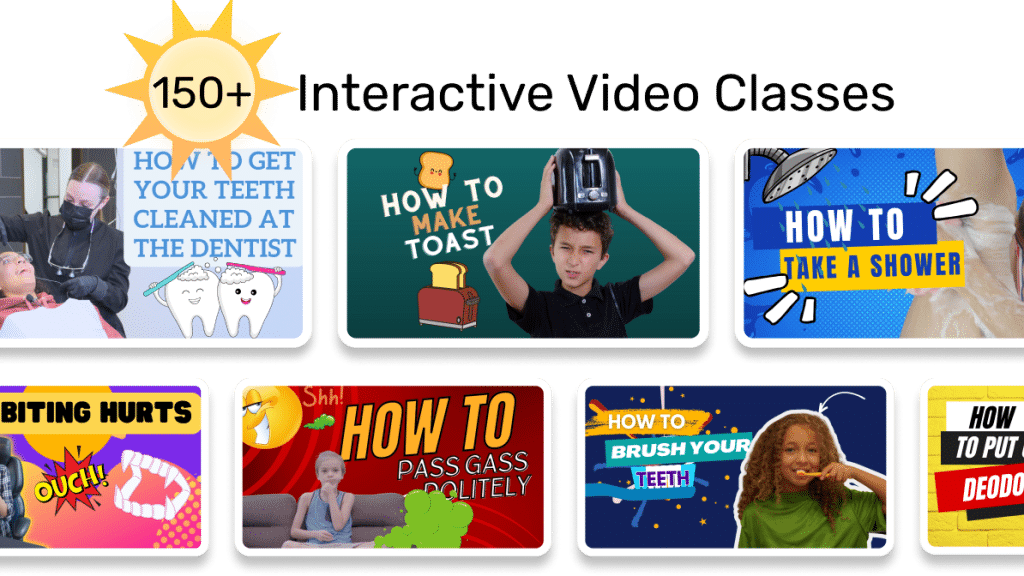
HERE’s a video explaining how to works.
Wearing a bike helmet the right way is a small step that makes a big difference in your child’s safety. By following these steps, you can help your child develop a safe and positive relationship with riding their bike. Remember, consistency and practice are key—soon, putting on a helmet will feel as natural as riding itself.
Helpful Resources
FAQ’s About How to Wear a Bike Helmet
How tight should a bike helmet be on a child’s head?
A bike helmet should be snug but comfortable. It shouldn’t wobble when your child moves their head, but it also shouldn’t be too tight that it causes discomfort. A properly fitted helmet sits level on the head, covering the forehead without pressing down hard.

How do I know if my child’s bike helmet fits properly?
To check if a helmet fits properly, make sure it sits level on your child’s head and covers the forehead. Adjust the side straps to form a “V” shape under the ears and buckle the chin strap with only one or two fingers' space. The helmet should not move when your child shakes their head.

Can a bike helmet be used after a fall?
No, bike helmets are designed to protect against a single impact. After a significant fall or crash, the structural integrity of the helmet may be compromised even if there are no visible signs of damage. It’s important to replace the helmet after any impact to ensure continued safety.

What age should kids start wearing bike helmets?
Kids should start wearing bike helmets as soon as they begin riding anything with wheels, such as tricycles, balance bikes, or scooters. There’s no specific age limit; the key is to instill helmet-wearing habits early to keep them safe as they grow more adventurous.
This post was originally published on 08/28/2023. It was updated on 09/09/2024.

Emily is a seasoned blog writer for Goally, leveraging her extensive background in child psychology and special education to provide valuable insights and resources for parents. Her commitment to understanding and addressing the unique needs of these children, combined with her expertise in educational strategies, makes her a credible and empathetic voice for families.