Struggling to keep your second grader’s behavior consistent? What is the perfect recipe for instilling discipline? You’re not alone. Parenting is a blend of art and science, especially regarding managing behaviors. In this blog post, we delve into an actionable yet compassionate routine – behavior charting. Beyond the typical disciplinary tactics, our post will guide you through the world of behavior charts for second graders. The cherry on top? You’ll get a printable, downloadable behavior chart at the end. Now, without further ado, let’s begin.
Table of Contents
The Nitty-Gritty of Behavior
Let’s start by stripping the issue down to its core. Behavior isn’t black and white; there’s a spectrum. In second graders, changes are constant and fast-paced. They are learning to navigate their emotions and reactions to the world around them. Meanwhile, parents must juggle their complex, often baffling behavior with our quest to unleash their potential.
Behavior, to put it simply, is communication. But how do we decipher this form of communication accurately and timely? That’s where the concept of behavior charts comes into play.
Read more: Child Behaviors by AgeNailing the Basics of Behavior Management
Briefly, behavior charting works on rewards and reinforcement. It tackles both positive and undesirable behaviors, helping to create a balanced emotional environment for your child. In fact, behavior charts have shown significant positive impacts on kids’ conduct.
Where Behavior Charts Fit In
A behavior chart for second graders resembles the Rosetta Stone of parenting. It’s a visual, easy-to-understand, and effective method of managing challenging behaviors while promoting positive ones. It’s not about control but an approach guided by understanding.
- Behavioral Shifts: Charts help you track patterns and shifts, providing valuable insights that may have been overlooked. They allow parents to pick up on certain triggers or situations that lead to specific behaviors.
- Setting Expectable Standards: Behavior charts make systematization a breeze. Children are clear about what is expected of them and are motivated to meet these standards.
- Positive reinforcement: They not only help control undesirable behavior but also reinforce positive ones. Each time your child meets a behavior expectation, it’s marked on the chart, acting as a pat on the back for your kiddo.
Step-by-step to Implementing a Behavior Chart
1. Clear Expectations: Outline clear, simple behaviors you’d like to encourage. It could be anything from doing homework on time to displaying good manners. Remember – specificity is key!
2. Creating the Chart: Design the chart in a way that suits your child’s comprehension levels best. It might be a good idea to get them involved in the process. This could make the chart more appealing and compelling to them.
3. Implementation: Now, it’s time to put the chart into action. Ensure it’s placed in a location that is easily accessible and visible for your child. Each time a targeted behavior is exhibited, mark it off on the chart.
4. Review: Regular reviews are essential. It’s at this juncture where your little one enjoys the results of their own actions and feels motivated to continue good behavior.

Read more: Developing a Reward Chart for Kids: Everything To KnowYour Guide to Managing Behaviors
Our downloadable behavior chart is a valuable tool. However, using it judiciously is vital. Here’s a roadmap to help you navigate the process:
- Consistency is king: Consistently using the chart enhances its efficiency. Therefore, missing a day can disrupt the routine.
- Flexibility: The chart should be flexible enough to accommodate new behaviors or changes.
- Positivity: Ultimately, it’s beneficial to focus more on positive behaviors than on restraining the negative ones.
Free Behavior Chart for Second Graders
Importantly, let’s not forget your free downloadable PDF. An all-encompassing behavior chart tailored for second graders, it promises to make your journey a little less challenging. Consider it a nice little lifeline.
Goally | Apps That Build Behavior & Life Skills for Kids
Want to keep your child motivated while building essential behavior and life skills? Goally’s skill-building tablet is designed to celebrate small wins and help your child grow. Our Behavior Tracker helps you reward your kid for specific skills, like “being kind” or “flushing the toilet.”
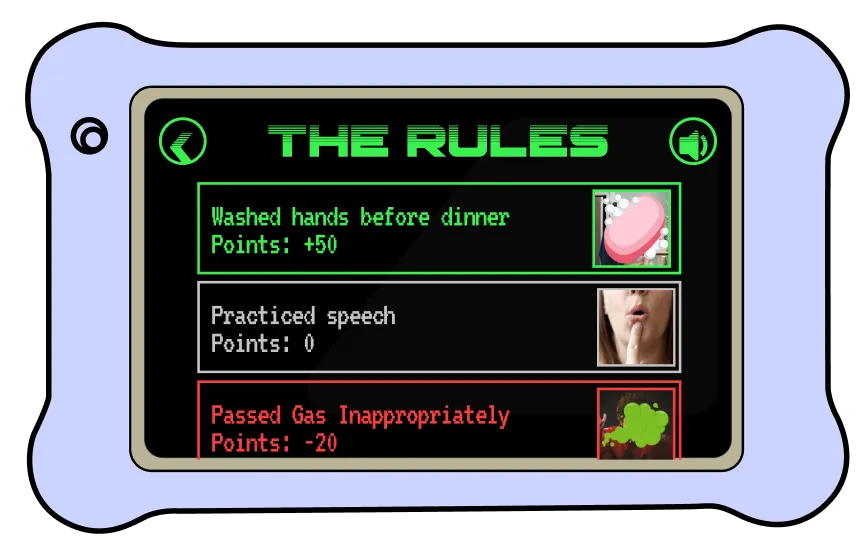
By setting clear expectations and rewarding their efforts, you foster a positive environment for your child to flourish in their behavioral skills journey.
To Sum Up
Dealing with your second grader’s behavior may feel like sailing through a storm, but there’s land in sight. There’s power in employing techniques that encourage your child to better understand and manage their actions. Fortunately, the simple yet powerful tool of a behavior chart can do just that. So, when the waters seem rough, remember – you’re not alone. You’re doing great, and this printable behavior chart will give you an extra helping hand.
FAQ about Behavior Chart for Second Graders
1. What is a behavior chart for second graders?
- This chart is an effective tool used to monitor and improve a second grader's behavior by rewarding them for good actions.

2. How does the behavior chart for second graders work?
- It works by listing desired behaviors and tracking your second grader's performance with notation or stickers.

3. Why is a behavior chart helpful for second graders?
- This chart helps in instilling discipline, teaching responsibility, and encouraging positive behavior in second graders.

4. Is it hard to implement a behavior chart for second graders?
- No, the behavior chart is designed to be intuitive and straightforward, making it easy to implement for both parents and children.
Hennah is an experienced writer and researcher, helping children with autism, ADHD, and other neurodivergent conditions. As a blog contributor for Goally, she combines her deep understanding of neurodiversity with practical advice, offering valuable insights to parents and educators.