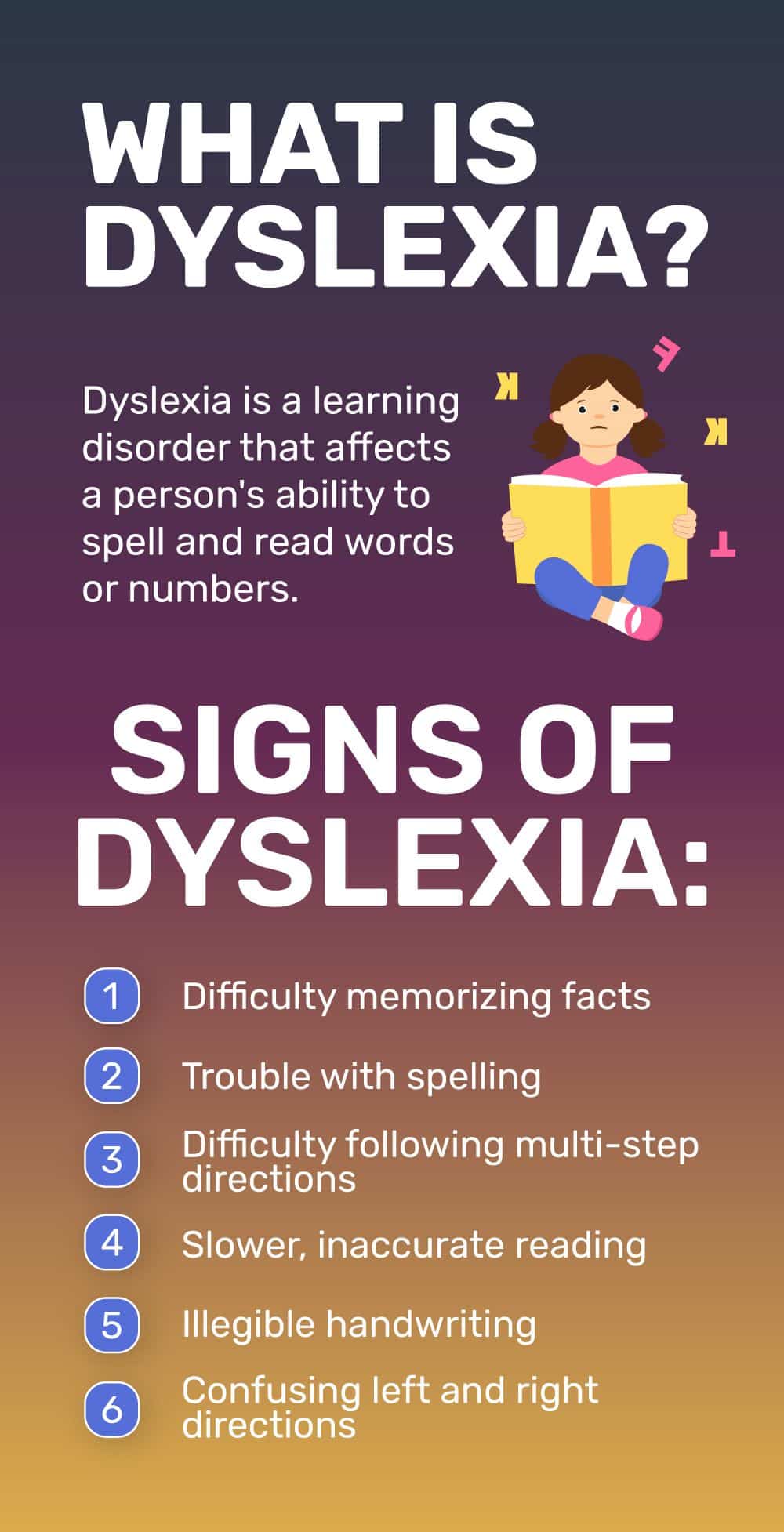
Directional dyslexia is when someone has difficulty understanding and following directions, like left and right. It can make it challenging for a person to navigate and understand spatial relationships.



Directional dyslexia is when someone has difficulty understanding and following directions, like left and right. It can make it challenging for a person to navigate and understand spatial relationships.


Are there specific activities to help my child with directional dyslexia?
Yes, engaging in interactive games, incorporating visual aids in daily life, consistent verbal practice with directional language, and exploring spatial awareness apps can support their development.
Can directional dyslexia be outgrown or improved with age?
With early intervention and targeted support, many individuals show significant improvement over time. Consistent practice and a supportive environment contribute to positive outcomes.
What long-term impact does directional dyslexia have on a person's life?
With proper strategies and support, individuals with directional dyslexia can lead fulfilling lives. Early identification and intervention positively influence their ability to navigate the world with confidence.
Is directional dyslexia the same as traditional dyslexia?
No, directional dyslexia specifically involves challenges with spatial orientation and understanding directions, whereas traditional dyslexia primarily affects reading and language skills.


Directional dyslexia, scientifically known as spatial dyslexia, is a condition where individuals experience difficulties processing and comprehending spatial information, particularly about directionality. This may manifest as challenges in distinguishing between left and right, understanding maps, or following sequential instructions involving spatial orientation. It is important to note that this difficulty is distinct from traditional dyslexia, which primarily affects reading and language skills. Individuals with directional dyslexia may benefit from tailored interventions and strategies to enhance spatial awareness and navigational abilities.

Recognizing the symptoms of directional dyslexia is crucial for timely intervention. Understanding and addressing these challenges early can significantly impact their development if your child exhibits the following signs.
Early identification of these symptoms allows for targeted support. Simple strategies like incorporating visual aids and verbal cues into daily activities can immediately impact your child’s navigation skills.