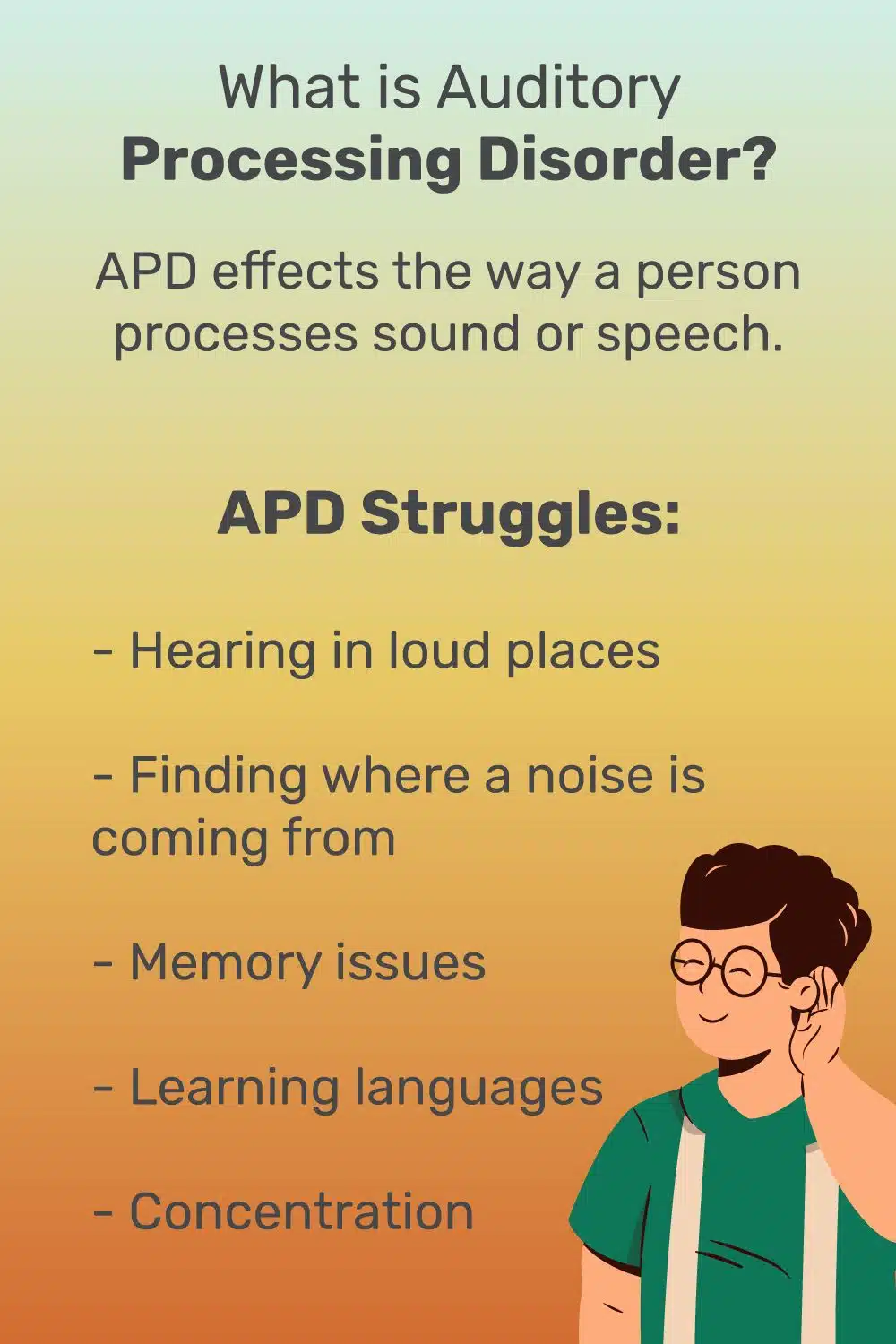
Auditory memory is a fascinating cognitive process that allows us to process and retain the information we hear. Let’s take a closer look at how it works and some examples of it in action:
- Processing Sounds: When we hear sounds, our auditory system sends the information to the brain for processing.
- Short-Term Storage: Auditory memory stores the sounds temporarily, like a mental snapshot, for a brief period.
- Selective Attention: Our brain filters and selects which sounds are important and must be remembered.
- Encoding and Retrieval: Auditory information is encoded in the brain through neural connections, enabling us to retrieve it later.
- Repeating and Rehearsing: Repeating or rehearsing the information helps strengthen the memory traces in auditory memory.
- Remembering Words and Sentences: Auditory memory allows us to remember spoken words, sentences, and conversations.
- Following Directions: It helps us process and retain verbal instructions, such as in a classroom or home setting.
Auditory memory is a dynamic process that enables us to comprehend, recall, and engage with our environment’s sounds and spoken language. It plays a crucial role in communication, learning, and daily interactions.